
How Jersey Mike’s Reduced Equipment Downtime by 18% Across 20 Locations with Zapium

-
Organization
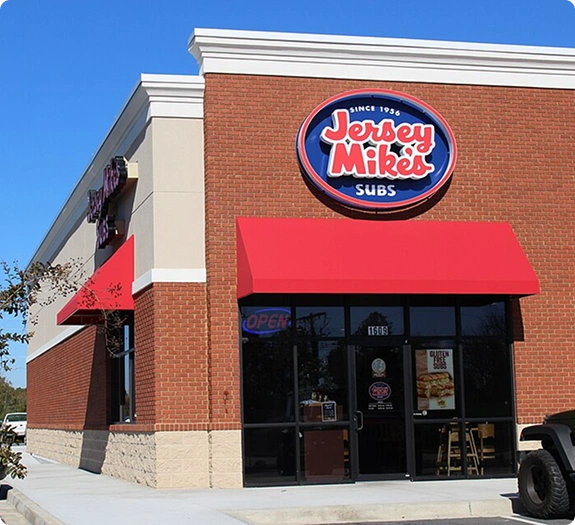
Jersey Mike’s Subs
-
Industry
Quick Service Restaurant (QSR)
Jersey Mike’s operates high-volume restaurant locations where equipment uptime directly impacts revenue, customer experience, and brand consistency. Each store depends on multiple critical assets- refrigeration, grills, slicers, HVAC, and POS systems—working without interruption.
Jersey Mike’s Subs operates 20 high-volume quick service restaurant locations where equipment uptime directly determines revenue, customer experience, and brand consistency. Each store depends on refrigeration, grills, slicers, HVAC, and POS systems operating without interruption during peak service hours. A single equipment failure during a lunch rush is not an inconvenience- it is a direct revenue loss and a customer experience failure.
As Jersey Mike’s expanded rapidly across locations, maintenance became impossible to manage consistently. Each store handled maintenance requests differently, creating inconsistent workflows and no standardization across the portfolio. Breakdowns were addressed only after failure, causing operational disruptions during the highest-traffic periods. Stores relied on local vendors without any centralized tracking of performance, cost, or service level agreements. Leadership had no real-time visibility into maintenance issues, asset performance, or cost trends across locations. Duplicate vendor calls, emergency repairs, and untracked invoices created significant cost leakage.
“Each store was handling maintenance in its own way. That works at 50 locations — but not at 1,000.”- Franchise CEO, Jersey Mike’s Subs
Jersey Mike’s implemented Zapium CMMS to standardize and centralize maintenance operations across all locations. A unified work order system replaced the fragmented store-by-store approach. Preventive maintenance was scheduled and tracked systematically rather than reactively. Vendors were brought under centralized SLA management with performance visibility. A portfolio-level dashboard gave leadership real-time insight into maintenance KPIs across every location. Store teams gained mobile access for faster issue reporting and resolution.
The results were measurable within months: 18% reduction in equipment downtime, 32% improvement in PM adherence, 12% reduction in cost leakage from untracked vendor spend and emergency repairs, and 46% faster issue reporting and resolution. The operations team moved from relying on store calls to confirm equipment status to seeing issues in real time across the entire portfolio.
“We no longer rely on store calls to know something is broken. We see it as it happens.” – Franchise CEO, Jersey Mike’s Subs
The Challenges
As Jersey Mike’s expanded rapidly, maintenance operations became increasingly difficult to control across locations.
Fragmented Maintenance
Each store managed issues differently, leading to inconsistent workflows and lack of standardization.
Reactive Failures
Breakdowns were addressed only after failure, causing operational disruptions during peak hours.
Uncontrolled Vendors
Stores relied heavily on local vendors without centralized tracking of performance, cost, or SLAs.
No Visibility
Leadership lacked real-time insight into maintenance issues, costs, and asset performance.
Cost Leakage
Duplicate vendor calls, emergency repairs, and untracked invoices increased operational expenses.
Revenue Impact
Equipment failures directly affected order fulfillment, customer wait times, and store ratings.
Breaking Point
The leadership team recognized that without a shift in approach, operational inefficiencies and risks would continue to escalate.
Site-level silos limited operational scalability
Audits became stressful and reactive
Vendor costs rose without clear accountability
Teams spent more time managing chaos
Leadership lacked real-time visibility, relying on delayed data
The Solution: Zapium CMMS Implementation
Jersey Mike’s implemented Zapium to standardize, centralize, and scale maintenance operations across all locations.
-
Centralize incoming requests into a single work order workflow.
-
Automate PM schedules and keep execution consistent across sites.
-
- Centralized vendor onboarding and tracking
- SLA definitions for response and resolution
- Performance monitoring across all vendors
-
Track vendor response quality and SLA adherence in one place.
-
Enable field updates, status changes, and task completion from mobile.
The Transformation and Impact
Within months, Jersey Mike’s moved from reactive store-level maintenance to a controlled, scalable system.
Operational
Improvements
- Transition from reactive to structured preventive maintenance
- Reduction in unplanned breakdowns
- Standardized workflows across all communities
- Faster work order resolution cycles
Leadership
Visibility
- Complete visibility into maintenance KPIs across locations
- Ability to identify underperforming sites and vendors
- Data-backed decisions for repair vs replacement
Compliance &
Audit Readiness
- Digitized maintenance records
- Easy retrieval of logs during inspections
- Reduced audit preparation time
What Changed for the Operations Head
Before Zapium, the operations team relied on fragmented updates from stores and vendors. After implementation, they gained centralized control over every location.
Why This Matters for QSR Operators
In multi-location restaurant operations, maintenance directly impacts:
Revenue per store
Customer experience
Brand consistency
Equipment lifecycle costs
Key Takeaway
Jersey Mike’s didn’t just digitize maintenance—they built a scalable system to manage uptime across hundreds of locations.
Zapium helps operators move fromReactive
Store-level firefighting
Centralized
Operational control
Running hundreds of stores without visibility into maintenance?
See how Zapium helps QSR chains reduce downtime, control costs, and standardize operations across locations.
Book a 15 mins walkthrough
By submitting your details, you agree that we may contact you by call, email, and SMS and that you have read our terms of use and privacy policy.