
Rockhouse
How Rock House Reduced Reactive Maintenance by 22% Across 100 Senior Living Communities


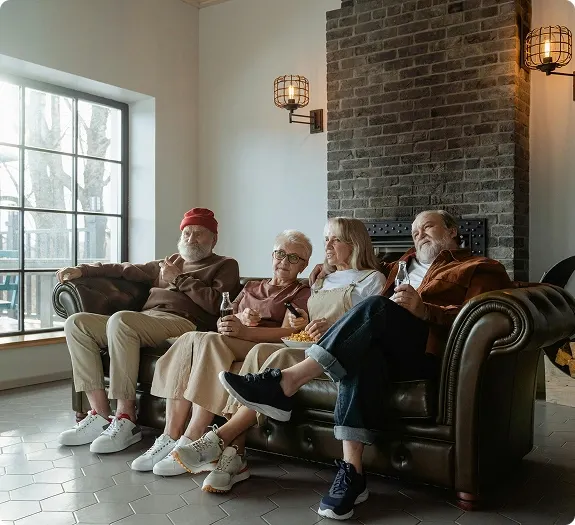
Rock House operates multiple senior living communities where maintenance is directly tied to resident safety, regulatory compliance, and operational continuity. Their facilities teams manage a wide mix of assets – from HVAC systems to life-safety equipment across geographically distributed locations.
22%
27%
35%
100%
Rock House is a 130-community senior living operator managing independent living, assisted living, and memory care facilities across the United States. With geographically distributed sites and a facilities team responsible for maintaining life-safety systems, HVAC, emergency call equipment, and hundreds of work orders per month, Rock House needed more than a work order tool – they needed portfolio-wide operational control.
As Darcy Rice, Facility Maintenance Director at Rock House, put it: “We were running maintenance like a set of disconnected sites instead of a unified operation. That worked at a smaller scale, but not anymore.”
Rock House implemented Zapium CMMS to centralize work orders, automate preventive maintenance scheduling, and give regional leaders a real-time portfolio dashboard. Technicians gained mobile access to assignments and asset history. Vendors were brought into a structured SLA tracking system. Maintenance records became fully digital, making compliance audits significantly less time-consuming.
For the first time, we can see what’s happening across all our communities without chasing updates. That changes how you operate.
- Darcy Rice, Facility Maintenance Director, Rock House
The Challenges
Disjointed Maintenance Workflow
Inconsistent PM Execution
Limited Vendor Oversight
Lack of Portfolio-Level Visibility
Decisions were limited by delayed and incomplete site-level data.
Maintenance Backlog Build-Up
Audit Readiness Gaps
Breaking Point
Site-level silos limited operational scalability
Audits became stressful and reactive
Vendor costs rose without clear accountability
Teams spent more time managing chaos
Leadership lacked real-time visibility, relying on delayed data
We were running maintenance like a set of disconnected sites instead of a unified operation. That worked at a smaller scale, but not anymore.
- Darcy Rice, Facility Maintenance Director, Rock House
The Solution: Zapium CMMS Implementation
Unified Work Order System
Preventive Maintenance Engine
Portfolio-Level Dashboard
- Real-time visibility into open work orders, backlog, and PM compliance
- Site-wise and asset-wise performance tracking
Vendor & SLA Tracking
Mobile Access for Technicians
The Transformation and Impact
01
Operational
Improvements
- Transition from reactive to structured preventive maintenance
- Reduction in unplanned breakdowns
- Standardized workflows across all communities
- Faster work order resolution cycles
02
Leadership
Visibility
- Complete visibility into maintenance KPIs across locations
- Ability to identify underperforming sites and vendors
- Data-backed decisions for repair vs replacement
03
Compliance & Audit Readiness
- Digitized maintenance records
- Easy retrieval of logs during inspections
- Reduced audit preparation time
What Changed for the Maintenance Head
For the first time, we can see what’s happening across all our communities without chasing updates. That changes how you operate.
- Darcy Rice, Maintenance Director, Rock House
For the first time, we can see what’s happening across all our communities without chasing updates. That changes how you operate.
- Darcy Rice, Maintenance Director, Rock House
Why This Matters for Senior Living Operators
Resident safety and comfort
Regulatory compliance
Staff productivity
Cost control across properties
Key Takeaway
Rock House didn’t just implement a CMMS; they built a scalable maintenance operating system for multi-location senior living.
Zapium helps operators move from
Reactive
Site-level firefighting
Structured
Portfolio-wide control
Get Started
Running hundreds of stores without visibility into maintenance?
- Walkthrough tailored to your industry and setup
- QR codes live — reporting from day one
- OSHA flow and CMMS integration covered