
Asset Management Vs Maintenance Management: Key Differences
Every asset-heavy organization eventually reaches a crossroads: should the focus be on long-term asset value or on day-to-day equipment reliability? I have seen leaders use “asset management” and “maintenance management” interchangeably, even though each plays a very different role in business performance.
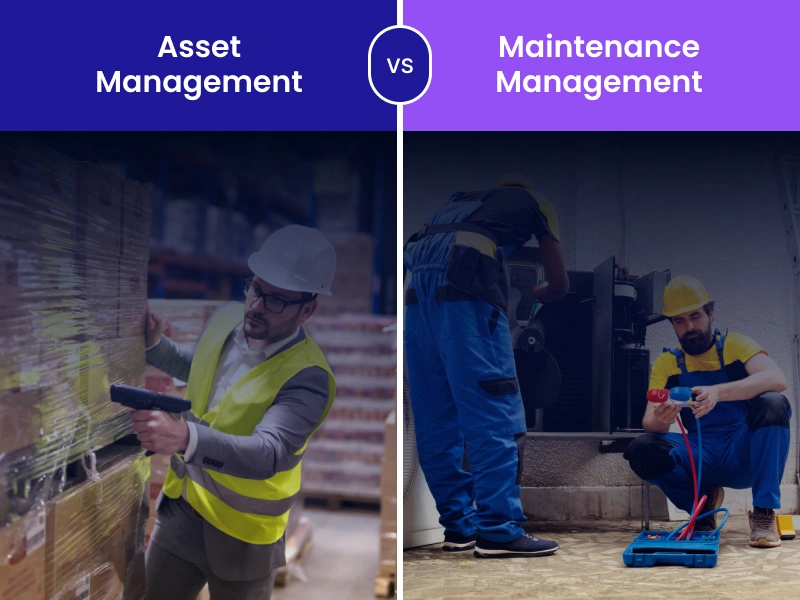
One shapes strategic investment decisions across the asset lifecycle, while the other keeps equipment running on the ground. Understanding how they differ – and where they intersect – can help organizations make smarter operational and financial decisions. Below, I discuss the asset management vs maintenance management comparison in detail to understand how both of them differ.
What Is Asset Management?
Asset management is a strategic discipline focused on maximizing the value of physical assets across their entire lifecycle. It extends beyond repairs or servicing and addresses how assets are planned, acquired, utilized, maintained, upgraded, and eventually retired. The purpose is to align physical infrastructure with broader business goals while balancing cost, risk, and performance.
Strategically, asset management answers high-level questions:
- When should we replace aging infrastructure?
- Are we overinvesting in underperforming equipment?
- How do asset risks impact financial outcomes?
A lifecycle approach is at the core of this function. Instead of reacting to breakdowns, organizations evaluate assets from procurement to disposal.
Financial planning plays a major role, because strategic asset management integrates with capital allocation processes, depreciation modeling, and budget forecasting. Decisions about refurbishments or new investments are supported by lifecycle cost analysis and projected ROI.
Next comes risk and compliance oversight which are also central responsibilities. Industries with heavy regulatory requirements must maintain clear documentation and audit trails.
I have been a witness to how technology supports these objectives through enterprise asset management (EAM) systems, centralized asset registers, condition monitoring tools, and analytics dashboards. These tools provide visibility across locations and departments, enabling informed strategic decisions instead of reactive spending.
What Are the Benefits of Asset Management?
An asset management program influences more than just equipment performance. Major benefits of asset management include:
- Improved Capital Allocation: Leadership can prioritize investments based on performance data and lifecycle cost analysis rather than assumptions.
- Lower Total Cost of Ownership: Strategic planning reduces premature replacements and avoids excessive maintenance spending on aging assets, and thus optimizes related spending.
- Better Risk Mitigation: Proactive risk assessments reduce safety incidents, compliance violations, and operational disruptions.
- Long-Term Performance Optimization: Assets are managed for sustained performance rather than short-term fixes.
- Enhanced Regulatory Compliance: Documented asset histories and structured oversight simplify audits and reporting requirements.
- Data-Driven Decision Making: Integrated systems provide actionable insights for executives and operations leaders.
What Are the Challenges involved with Asset Management?
Despite its strategic advantages, asset management comes with implementation hurdles that organizations must navigate carefully. Challenges that stand in the way are:
- High Initial Investment: Deploying enterprise systems and analytics platforms requires capital and executive commitment.
- Data Quality Issues: Incomplete or inconsistent asset records limit the effectiveness of strategic planning.
- Cross-Department Coordination: Finance, operations, procurement, and compliance teams must collaborate consistently.
- Long Payback Periods: Benefits may take years to fully materialize, making short-term return on investment (ROI) difficult to measure.
- Complex Change Management: Shifting from reactive decisions to structured lifecycle planning requires cultural alignment.
What Is Maintenance Management?
Maintenance management is the practice of daily execution required to keep assets operating safely and reliably. Here, maintenance teams plan inspections, perform servicing, respond to breakdowns, and manage spare parts inventory. The goal is straightforward: reduce downtime, control maintenance costs, and maintain safety standards.
Planning and scheduling play a central role in maintenance. Without structured scheduling, organizations face reactive firefighting, overtime costs, and production disruptions. It is here that a work order system comes into picture. It tracks tasks from request to completion, providing visibility into backlog and technician productivity and has its own importance in maintenance management.
Based on the need, leadership must adopt different maintenance strategies. These generally fall into three categories which are
- Preventive maintenance: Relies on routine servicing at fixed intervals.
- Predictive maintenance: Uses condition-monitoring data to anticipate failures.
- Corrective maintenance: Addresses unexpected breakdowns.
Mature maintenance programs balance all three approaches to control risk while managing cost.
To ensure that a maintenance program is functioning effectively, performance monitoring becomes critical. Metrics such as mean time between failures (MTBF), mean time to repair (MTTR), schedule compliance, and overall equipment effectiveness (OEE) reveal operational strengths and weaknesses. Continuous improvement efforts must be applied to refine scheduling accuracy, technician training, and spare parts management.
What Are the Benefits of Maintenance Management?
Maintenance management strengthens operational reliability, stabilizes production output, and brings cost discipline to equipment upkeep. Its major benefits include:
- Reduced Unplanned Downtime: Planned preventive and predictive activities minimize sudden equipment failures that interrupt production.
- Improved Equipment Reliability: Routine inspections and timely servicing keep assets operating within expected performance levels.
- Extended Asset Lifespan: Addressing wear early prevents secondary damage and delays premature replacements.
- Better Workforce Productivity: Clear work order planning and scheduling reduce confusion, idle time, and duplicated effort.
- Controlled Maintenance Spending: Planned work lowers emergency repair costs, overtime expenses, and rush procurement of spare parts.
- Stronger Safety Performance: Regular equipment checks reduce hazards associated with malfunctioning machinery.
What Are the Challenges involved with Maintenance Management?
Even structured maintenance programs face operational and organizational barriers. Challenges from:
- Reactive Maintenance Culture: Teams frequently prioritize urgent breakdowns over preventive scheduling, limiting long-term reliability gains.
- Inconsistent Asset Data: Incomplete maintenance records restrict accurate planning and performance analysis.
- Workforce and Skill Shortages: Limited availability of experienced technicians slows response times and increases dependency on contractors.
- Spare Parts Management Issues: Stockouts delay repairs, while excess inventory ties up working capital.
- Budget Constraints: Pressure to reduce costs can postpone essential preventive tasks and increase future failure risks.
- Scheduling and Backlog Problems: Poor prioritization and overloaded work queues reduce efficiency and extend equipment downtime.
Differences Between Asset Management and Maintenance Management
Asset management and maintenance management often operate within the same organizational ecosystem, yet their responsibilities, decision horizons, and performance metrics differ significantly. The table below outlines the key distinctions across scope, financial orientation, stakeholders, and operational focus:
| Basis of Comparison | Asset Management | Maintenance Management |
|---|---|---|
Primary Focus | Maximizing long-term asset value and aligning assets with business strategy | Maintaining equipment reliability and operational continuity |
Scope | Enterprise-wide oversight covering acquisition, utilization, renewal, and disposal | Department-level execution focused on servicing and repairs |
Time Horizon | Long-term planning (years to decades) | Short- to medium-term execution (daily, weekly, monthly) |
Decision Level | Strategic and capital planning decisions | Tactical and operational decisions |
Financial Orientation | Capital investment planning, lifecycle costing, and ROI analysis | Maintenance budgeting, labor control, and repair cost management |
Risk Management | Enterprise risk assessment, compliance governance, and asset-related financial exposure | Equipment-level risk reduction through inspections and servicing |
Technology Systems Used | Enterprise Asset Management (EAM) platforms and analytics tools | Computerized Maintenance Management Systems (CMMS) and scheduling tools |
Performance Metrics | Asset lifecycle cost, return on assets, asset utilization rates | MTBF, MTTR, schedule compliance, downtime rates |
Stakeholders Involved | Executives, finance teams, compliance officers, operations leadership | Maintenance managers, supervisors, technicians |
End Objective | Sustained asset value and strategic resource allocation | Reliable equipment performance and minimized operational disruptions |
How Asset Management and Maintenance Management Work Together
Asset management and maintenance management function best when aligned rather than isolated. Maintenance activities should reflect long-term asset strategy, avoiding overinvestment in assets nearing replacement.
Integrating data across EAM and CMMS systems creates a shared performance view, connecting operational metrics with strategic planning. Reliable maintenance execution improves asset uptime and overall performance, while historical repair and failure data provide valuable insights that support informed capital planning and replacement decisions.
When to Prioritize Asset Management
Asset management should take precedence when long-term financial exposure and strategic risk outweigh short-term operational concerns. Organizations operating in capital-intensive industries such as manufacturing, utilities, transportation, or energy must carefully plan asset lifecycles and capital allocation.
Multi-site or distributed operations also require centralized oversight to standardize asset performance and investment decisions, as I have observed. Asset management is an important function here. In regulatory-heavy environments, structured asset governance becomes critical to manage compliance obligations, audit readiness, and enterprise-level risk.
When to Prioritize Maintenance Management
Maintenance management deserves immediate focus when operational instability begins affecting productivity and revenue. Frequent equipment failures, rising downtime, or inconsistent production output signal reliability gaps that demand structured maintenance execution.
Organizations experiencing workforce inefficiencies, growing work order backlogs, or poor scheduling discipline should strengthen maintenance coordination first. In such cases, improving day-to-day execution delivers faster operational gains than long-term strategic restructuring.