

Asset management is the practice or a process of managing assets to achieve specific goals. It includes tracking, maintaining, and optimizing assets such as money, equipment, or property to maximize their value over time.
Across finance, IT, and real estate, asset management supports better decision-making. It helps grow wealth, reduce risks, and improve operational efficiency by using resources effectively and keeping assets in good condition for long-term performance. Let’s discuss at length about this practice in this comprehensive guide to asset maintenance management.
Why is Asset Management Important?
Strong asset management keeps resources working productively, reduces waste, and aligns investments with long-term objectives. Asset management is important because it is a practice that
- Improves resource utilization by tracking and optimizing asset performance
- Supports better financial planning and long-term wealth growth
- Reduces risks through regular monitoring and maintenance
- Enhances operational efficiency across departments
- Helps in compliance with regulations and audits
- Extends the lifespan of physical and digital assets
- Enables informed decision-making with accurate asset data
What are the Types of Asset Management?
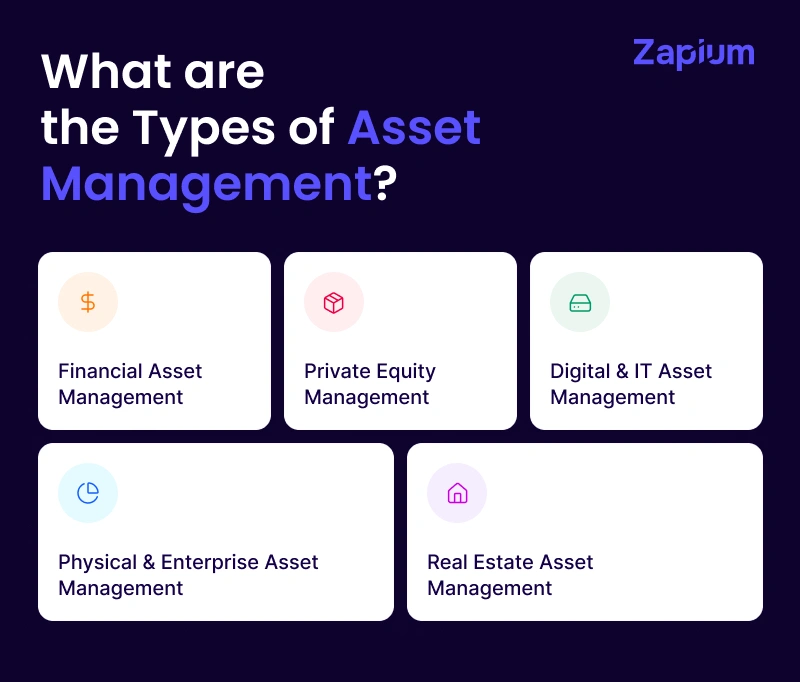
Asset management covers a wide range of practices, each tailored to specific types of assets such as financial investments, physical resources, and digital systems. Different types of asset management help organizations and individuals handle assets more effectively, depending on their nature and purpose.
Financial Asset Management
Focuses on managing investments like stocks, bonds, and mutual funds to meet financial goals. It supports wealth growth, balances risk through diversification, and aims to maximize returns for individuals and institutions.
Physical & Enterprise Asset Management
Deals with tangible assets such as machinery, equipment, and buildings. It improves operational efficiency, minimizes downtime, and extends asset lifespan across industries like manufacturing, construction, and logistics — all core objectives of enterprise asset management, which provides the strategic framework and tools to achieve them at scale.
Digital & IT Asset Management
Covers hardware, software, and digital resources. It helps optimize IT infrastructure, improves system performance, and maintains security and compliance within organizations.
Private Equity Management
Involves managing investments in private companies or startups. It focuses on increasing value through strategic growth, operational improvements, and exit strategies such as mergers or acquisitions.
Real Estate Asset Management
Centers on managing property assets to maximize value and profitability. It includes acquisition, leasing, maintenance, and long-term investment planning in residential and commercial real estate.
What are the Key Components of Asset Management?
Asset management relies on a set of core components that keep everything running smoothly from planning to execution. Key elements such as asset inventory management, service level agreements, risk assessment, life cycle costing, and financial planning work together to provide structure and control. Each component plays a specific role, yet all of them connect to support efficient operations, cost control, and long-term value across industries.
Asset Inventory & Condition Management
Asset inventory and condition management refers to the process of identifying, tracking, and evaluating the current state of assets. It helps organizations maintain accurate records of what assets they own, where they are located, and how well they are performing. Regular condition monitoring streamlines preventive maintenance and brings down the occurrences of unexpected failures. As a result, businesses reduce downtime, avoid unnecessary repairs, and keep operations running efficiently.
Service Level Agreements (SLA)
Service level agreements (SLAs) are formal contracts that define the expected level of service between providers and clients. In asset management, SLAs set clear performance standards, response times, and responsibilities. They help maintain consistency in service delivery and create accountability among stakeholders. With well-defined SLAs, organizations can monitor performance, address issues quickly, and maintain reliability in asset-related services.
Criticality & Risk Assessment
Criticality and risk assessment focuses on identifying how important each asset is and what risks could affect its performance or value. By evaluating factors such as failure impact, usage, and dependency, organizations can prioritize assets that require immediate attention. This approach reduces the chances of major disruptions and allows better allocation of resources. It also supports informed decision-making by highlighting potential risks before they escalate.
Life Cycle Costing & Optimization
Life cycle costing and optimization involves analyzing the total cost of an asset from acquisition to disposal. Instead of focusing only on initial purchase costs, it considers maintenance, operation, and replacement expenses over time. Such an approach helps organizations make smarter investment decisions and choose cost-effective solutions. Optimizing costs throughout the asset’s life improves financial efficiency and ensures better returns on investment.
Long-Term Funding & Financial Planning
Long-term funding and financial planning refers to the strategies used to manage the financial resources required for assets over time. It includes budgeting for acquisition, maintenance, upgrades, and eventual replacement. Proper financial planning helps organizations avoid sudden financial strain and maintain continuity in operations. By aligning funding strategies with asset needs, businesses achieve stability and support sustainable growth.
What are the Benefits of Asset Management?
Asset management brings structure to how assets are handled, helping individuals and businesses grow wealth, balance risks, and improve day-to-day performance. The following are some notable benefits of asset management:
Wealth Growth
Asset management plays a major role in growing wealth by continuously improving the value of both financial and physical assets. Through strategies like reinvestment of returns and proper asset allocation, it helps generate consistent income and capital appreciation. Over time, disciplined management allows assets to perform better, leading to steady wealth accumulation for individuals and organizations.
Risk Diversification
Spreading investments across different asset classes reduces dependency on a single source of returns. Asset management encourages diversification by allocating resources across equities, bonds, real estate, and other assets. Such distribution minimizes the impact of market fluctuations and helps maintain stability, even when certain sectors underperform.
Mitigation of Financial Risk
Managing assets also means identifying and controlling potential risks that could affect their value. Asset management uses techniques like diversification, insurance coverage, and hedging to limit exposure to uncertainties. By assessing risks early and applying appropriate strategies, it reduces the chances of significant financial losses caused by market volatility or unexpected events.
Improved Operational Efficiency
Efficient use of assets directly impacts productivity and cost control. Asset management helps organizations keep assets in good condition, schedule timely maintenance, and avoid unnecessary downtime. Strategic planning reduces wastage of resources and lowers maintenance costs, allowing businesses to operate more smoothly and effectively.
Financial Planning
Long-term financial planning becomes more structured with proper asset management. It aligns assets with specific goals, whether related to business expansion, retirement, or major investments. Careful planning ensures that sufficient resources are available when needed, helping avoid financial gaps and supporting future growth.
Professional Management
Access to professional expertise adds significant value to asset management practices. Experienced managers bring knowledge of market trends, investment strategies, and risk control methods. Their involvement helps in making informed decisions, improving asset performance, and reducing costly errors, ultimately leading to better overall outcomes.
What are the Risks and Challenges in Asset Management?
Managing assets isn’t without its hurdles, and overlooking key asset management challenges can quickly impact performance and returns. Asset management requires careful planning to deal with uncertainties, operational issues, and external pressures. Factors such as market volatility, liquidity constraints, operational risks, and regulatory compliance often shape decisions and influence how effectively assets are managed over time.
Market Volatility
Market volatility creates uncertainty by causing frequent fluctuations in asset values. Economic changes, political instability, and global events can directly affect investment performance and returns. Such unpredictability makes it difficult to forecast outcomes and requires constant monitoring and adjustments. Asset managers often rely on diversification and strategic planning to reduce the impact of sudden market movements.
Liquidity Constraints
Liquidity constraints arise when assets cannot be quickly converted into cash without significant loss in value. Certain investments, such as real estate or long-term securities, may take time to sell. Poor liquidity management can lead to cash shortages during critical situations. Maintaining a balance between liquid and illiquid assets helps meet financial needs without compromising overall asset value.
Operational Risks
Operational risks stem from inefficiencies in managing and maintaining assets. Issues like underutilization, delayed maintenance, or outdated processes can increase costs and reduce performance. Poor coordination and lack of proper systems may also lead to asset mismanagement. Streamlining operations and adopting efficient practices helps maintain asset productivity and control expenses.
Regulatory Compliance
Meeting regulatory requirements remains a constant challenge in asset management. Organizations must follow industry laws, standards, and reporting practices to avoid legal complications. Non-compliance can result in penalties, financial losses, and damage to reputation. Staying updated with regulations and maintaining proper documentation helps reduce compliance-related risks and supports smooth operations.
How Does Asset Management Work?
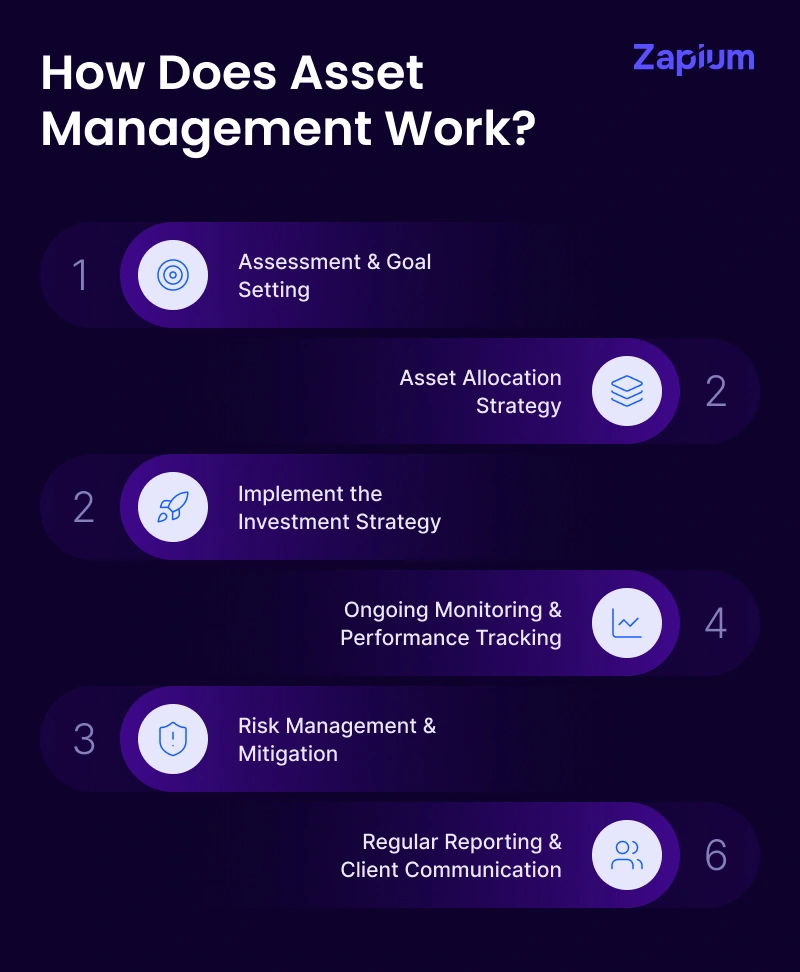
Handling assets effectively calls for a structured process that connects planning with execution. Asset management works through a series of steps such as goal setting, asset allocation, implementation, monitoring, risk control, and reporting. Each stage builds on the previous one, helping individuals and businesses maintain control over assets while improving performance and long-term value.
- Initial Assessment & Goal Setting
The process begins with evaluating existing assets and identifying specific needs and objectives. Initial assessment and goal setting help define what the asset portfolio is expected to achieve, whether it is growth, income, or stability. Clear goals act as a roadmap, guiding decisions related to investment choices, resource allocation, and overall strategy throughout the asset management lifecycle.
- Asset Allocation Strategy
Asset allocation strategy refers to deciding how assets are distributed across different categories such as equities, bonds, or real estate. It plays a key role in balancing risk and return by aligning investments with the defined objectives. A well-planned allocation helps reduce exposure to uncertainty while improving the chances of achieving desired financial outcomes.
- Implementing the Investment Strategy
After planning, the next step focuses on executing the strategy by selecting suitable assets and making investments. It includes purchasing assets, managing transactions, and maintaining the portfolio based on predefined goals. Proper implementation allows the strategy to take shape in practical terms, with continuous attention to performance and market conditions.
- Ongoing Monitoring & Performance Tracking
Asset management does not stop after implementation; continuous monitoring remains essential. Tracking performance helps determine whether assets are meeting expectations and contributing to set goals. Various tools and asset maintenance metrics are used to measure returns, efficiency, and asset condition. Regular evaluation allows timely adjustments, keeping the strategy aligned with changing circumstances.
- Risk Management & Mitigation
Identifying and controlling risks forms a critical part of asset management. Risk management focuses on analyzing potential threats such as market fluctuations, operational issues, or external disruptions. Strategies like diversification, hedging, and regular reviews help minimize negative impacts, protecting asset value and maintaining stable performance over time
- Regular Reporting & Client Communication
Consistent reporting keeps stakeholders informed about asset performance, risks, and progress toward objectives. Transparent communication builds trust and allows clients or decision-makers to stay involved in the process. Regular updates also make it easier to refine strategies and keep asset management aligned with expectations and long-term goals.
What are the Best Practices in Asset Management?
Getting asset management right often comes down to following proven practices that keep assets productive and aligned with goals. A well-defined asset maintenance strategy supports these efforts by improving performance, reducing unnecessary risks, and limiting operational inefficiencies. Adopting best practices helps organizations and individuals make informed decisions, extend asset lifespan, and stay on track for long-term success.
- Diversification of Assets
Diversification remains one of the most effective ways to manage risk. By spreading investments across different asset classes, sectors, or regions, dependency on a single asset is reduced. A balanced portfolio can better withstand market downturns, as losses in one area may be offset by gains in another, leading to more stable overall performance.
- Regular Portfolio Monitoring
Keeping a close eye on asset performance helps maintain alignment with financial goals. Regular monitoring allows asset managers to identify underperforming assets and make timely adjustments. Changing market conditions, evolving objectives, or unexpected events require periodic reviews to keep the portfolio relevant and effective.
- Transparency in Reporting
Clear and consistent reporting builds confidence among stakeholders. Providing accurate updates on asset performance, risks, and financial outcomes helps maintain accountability. Transparency also supports better decision-making, as stakeholders have access to reliable information about how assets are being managed.
- Adherence to Risk Management Strategies
Following structured risk management practices helps protect asset value. Identifying potential risks, assessing their impact, and applying mitigation strategies such as diversification or hedging reduces the likelihood of major losses. A disciplined approach to risk management supports consistent and predictable performance.
- Continuous Market Research and Adaptation
Staying informed about market trends plays a key role in asset management. Ongoing research helps identify new opportunities and potential threats. Being flexible and adapting strategies based on current data allows asset managers to respond quickly to changes and maintain optimal performance.
- Using CMMS for Enhanced Asset Management
Using a computerized maintenance management system (CMMS) improves how assets are tracked and maintained. It provides real-time data on asset condition, automates maintenance schedules, and streamlines workflows. With better visibility and data-driven insights, organizations can make quicker decisions, reduce downtime, and improve overall efficiency.
What Skills are Required for Asset Management?
Following are the most essential skill sets that are required for making informed decisions, improving asset performance, and handling challenges with confidence.
- Investment Analysis
Investment analysis focuses on evaluating different assets to understand their potential returns and associated risks. It helps asset managers compare options, identify profitable opportunities, and allocate resources wisely. Strong analytical ability in this area supports better decision-making and improves the chances of achieving financial goals.
- Risk Assessment and Mitigation
Identifying and managing risks remains a critical skill in asset management. It involves analyzing possible threats to asset value and applying strategies to reduce their impact. Techniques such as diversification, hedging, and regular reviews help maintain stability and protect investments from unexpected losses.
- Financial Modeling
Financial modeling involves creating structured representations of financial scenarios to predict asset performance. These models help estimate returns, assess risks, and plan future strategies. With accurate models, asset managers can make data-driven decisions and adjust plans based on projected outcomes.
- Client Communication and Relationship Management
Clear communication and strong relationships play a key role in managing assets effectively. Understanding client goals, explaining strategies, and providing regular updates help build trust. Good relationship management also makes it easier to align asset decisions with client expectations and long-term objectives.
- Regulatory Knowledge and Compliance
A solid understanding of regulations and compliance requirements is essential in asset management. Following legal standards helps avoid penalties and operational issues. Staying updated with industry rules also supports ethical practices and ensures that asset management activities run smoothly within defined guidelines.
What Are the Career Opportunities in Asset Management?
Asset management offers a wide range of career opportunities, each focused on managing, analyzing, and optimizing assets for better performance. Roles such as asset manager, portfolio manager, and investment analyst form the backbone of this field, supported by professionals who handle risk and client relationships. Each position requires a mix of analytical skills, financial knowledge, and strategic thinking to manage assets effectively.
- Asset Manager
An asset manager is responsible for overseeing and managing client assets, ensuring they deliver consistent value over time. The role includes making strategic investment decisions, monitoring asset performance, and balancing risk with returns. A strong focus remains on achieving growth while protecting assets from potential losses through careful planning and analysis.
- Portfolio Manager
A portfolio manager handles the day-to-day management of a client’s investment portfolio. Key responsibilities include selecting suitable assets, deciding allocation strategies, and tracking overall performance. The goal is to align investments with financial objectives while adjusting the portfolio based on market conditions and performance trends.
- Investment Analyst
An investment analyst focuses on researching markets, studying financial data, and evaluating investment opportunities. The role requires analyzing trends, company performance, and economic indicators to provide actionable insights. These insights support informed decision-making and help asset managers and portfolio managers choose the right investments.
- Risk Manager
A risk manager plays a crucial role in identifying and managing potential threats to asset value. Responsibilities include analyzing risks related to market volatility, operational challenges, and external factors. By applying risk mitigation strategies, the role helps protect assets and maintain stability in uncertain conditions.
- Client Relationship Manager
A client relationship manager focuses on maintaining strong communication with clients and understanding their financial goals. The role includes providing updates on asset performance, explaining strategies, and addressing concerns. Building trust and ensuring client satisfaction remain central to managing long-term relationships in asset management.
What Are the Typical Fees And Costs Associated in Asset Management?
Asset management services come with a range of fees and costs that directly affect overall returns. Common charges include management fees, performance fees, and transaction costs, each tied to different aspects of managing assets. Understanding how these fees are structured helps investors evaluate the true cost of services and make better financial decisions.
- Management Fees:
Management fees are the standard charges for overseeing and managing assets. They are typically calculated as a percentage of assets under management (AUM) and are charged annually. In many cases, these fees fall within a broad range of about 0.5% to 2% of AUM, depending on the type of service, asset class, and level of customization.
- Performance Fees:
Performance fees are charged when asset managers achieve returns above a predefined benchmark or target. These fees are usually structured as a percentage of the profits earned, often around 10% to 20% of gains. Some structures include a “high-water mark,” meaning fees are only charged on new profits beyond previous peaks.
- Transaction Fees:
Transaction fees are incurred when buying or selling assets within a portfolio. These may include brokerage charges, commissions, and market spreads. The cost varies based on trading volume, asset type, and the platform used, and frequent trading can significantly increase overall expenses.
- Other Possible Costs:
Additional costs may include custody fees (for holding assets), advisory or consulting fees, and administrative expenses. In certain cases, exit fees or early withdrawal charges may also apply, depending on the investment structure.
How Does CMMS Software Enhance Asset Management?
Computerized Maintenance Management Systems (CMMS) significantly improve asset maintenance management by centralizing data and streamlining the entire maintenance process.
Acting as advanced management software, CMMS solutions integrate seamlessly with asset management software to give organizations complete visibility into assets, their condition, and ongoing maintenance activities.
Such systems support a well-defined maintenance strategy, allowing the maintenance team to handle maintenance tasks efficiently while aligning with broader asset management strategies and asset maintenance strategies.
A CMMS also plays a crucial role in building an effective asset maintenance framework by supporting both preventive and predictive maintenance approaches. With capabilities like predictive maintenance and condition-based maintenance, it helps determine when maintenance better asset performance is required, reducing the risk of equipment failure and unexpected asset failure.
At the same time, it balances reactive maintenance and corrective maintenance efforts, allowing organizations to shift toward proactive maintenance. By maintaining detailed maintenance histories, businesses can design a structured asset maintenance plan, extend asset life, and achieve successful asset maintenance outcomes.
Additionally, CMMS platforms support maintenance planning and automate how organizations schedule maintenance, covering everything from routine maintenance to complex interventions. These systems strengthen the overall maintenance program, making optimizing maintenance more practical across departments, including facilities management.
For facility managers, this translates into better control, improved effective maintenance, and the ability to implement an effective maintenance strategy that reduces downtime, improves efficiency, and supports long-term asset value.